

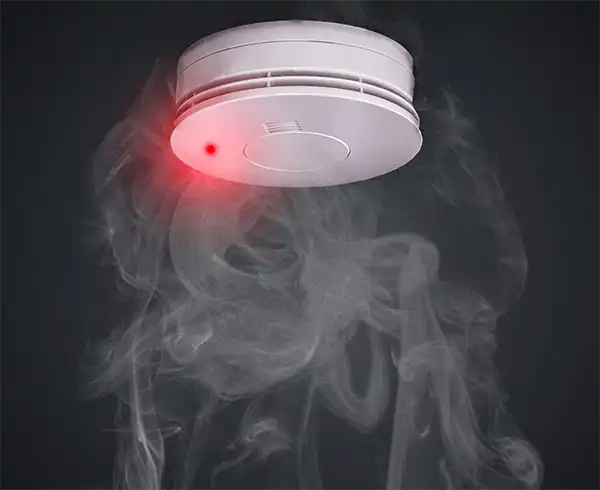
Smoke detectors are one of the simplest and most effective safety devices in any home — yet they’re often the most overlooked. A working smoke alarm gives you and your family precious minutes to escape in an emergency. But just like any electrical device, they don’t last forever.
🧯 How Often Should Smoke Detectors Be Replaced?
According to Australian Standard AS 3786:2014, smoke alarms must be replaced every 10 years from their manufacture date — not from when they were installed.
Even if they still “beep” during testing, the internal sensors degrade over time, becoming less reliable at detecting smoke.
🕐 Tip: Check the manufacture date printed on the back of your detector.
If it’s older than 10 years, it’s time for a new one.
⚠️ Signs of an Expired or Failing Smoke Detector
Keep an eye (and ear) out for:
- Frequent false alarms or beeping for no reason
- A yellowed or discoloured casing
- The test button not responding properly
- No manufacturer label or unreadable date
- Chirping sounds even after battery replacement
If you notice any of these, your detector is due for replacement — or it may no longer be compliant.
🏠 Where Should Smoke Detectors Be Installed?
Placement is just as important as maintenance. For homes in NSW, legislation requires smoke alarms on every level of the home, and:
- In hallways outside bedrooms or sleeping areas
- In living areas and near the kitchen (but not too close to avoid false alarms)
- In multi-level homes, at the top of stairways
- For the best protection, also install one in each bedroom
💡 Always mount alarms on the ceiling, as smoke rises, and at least 300mm away from corners or light fittings.
💨 The Different Types of Smoke Detectors
There are several types of smoke detectors, each suited to different environments:
1. Photoelectric (Optical) Smoke Alarms
- Detect visible smoke from smouldering fires (e.g. electrical faults, bedding fires)
- Best for living areas and bedrooms
- Recommended by NSW Fire and Rescue
2. Ionisation Smoke Alarms
- Detect invisible particles from fast-flaming fires (e.g. kitchen, paper, or grease fires)
- Can be prone to false alarms near cooking areas
3. Dual Sensor Smoke Alarms
- Combine both photoelectric and ionisation technologies for broader coverage
4. Hard-Wired vs Battery-Operated
- Hard-wired alarms are powered by 240V and include a battery backup (required in new homes and renovations under AS/NZS 3000)
- Battery-operated alarms are suitable for retrofits or temporary setups, but must be regularly tested
For the best safety and compliance, hard-wired photoelectric alarms interconnected across your home are the gold standard.
🔧 When to Call a Licensed Electrician
Installing or replacing smoke alarms — especially hard-wired units — must be done by a licensed electrician.
At C Fleming Electrical, we:
- Supply and install compliant photoelectric smoke detectors
- Replace expired or faulty alarms
- Check interconnection and wiring
- Test and certify systems to AS 3786 and AS/NZS 3000 standards
We can also include smoke alarm checks in your free basic electrical safety inspection for Central Coast homeowners.
⚡ Don’t Take Chances with Fire Safety
A working smoke detector can be the difference between a close call and a tragedy.
If you’re unsure whether your alarms are compliant, installed correctly, or still within their service life — it’s time to get them checked.